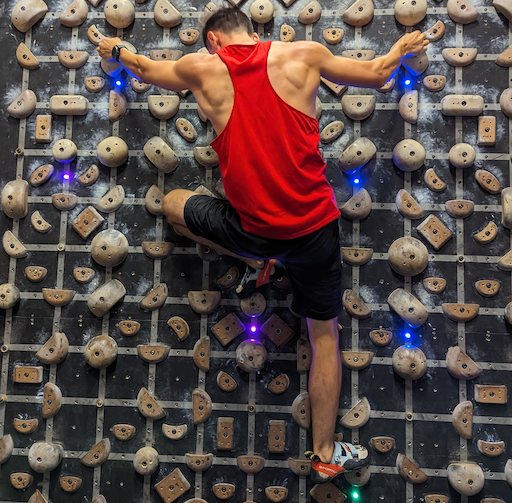
I consider myself a bit of a recreational athlete, meaning I do sports for fun and health: rock climbing, Muay Thai, running, and occasionally visiting conventional gyms. In 2021 I worked out 365 days straight and as of now have 2.3K logged activities on Strava with a 140 weeks long streak. I haven’t been like this 9 years ago or earlier, barely doing any activities back then, but over time I realized that health and time are the most valuable assets I have. This post is a few things: self reminder to stay on track, potentially some inspiration for you, and an attempt to drive analogies between athletic performance training and software engineering careers.
LEVEL 0: Non-Compromisable Fundamentals
There are only three fundamentals in my opinion. Compromising these is the worst thing you can do to your health, not just physical, but also mental performance, yes including your software engineering career.
Sleep
- I cannot stress enough how important sleep is: lack of sleep is a slow form of self-euthanasia. The shorter your sleep, the shorter your life.
- Reducing your sleep time to do more work is counterproductive and all the way detrimental to your health and creativity. It may work short term only or if you have some special super-human abilities. I don’t.
- For a software engineer, sleep deprivation doesn’t just hurt your health. It destroys creativity and makes complex problem-solving nearly impossible. My productivity is extremely low if I haven’t had enough sleep two days in a row.
Nutrition
- You become what you eat.
- I don’t want to expand too much here. We all know the basics: not skipping meals, proper balance of macro and micro, no junk food, less sugar, little or no alcohol. It’s all common knowledge. Consistency is hard.
Physical activity
- The basic amount of physical movement is a MUST unless you want to die earlier.
- To cite AHA: “at least 150 minutes per week of moderate-intensity aerobic activity or 75 minutes per week of vigorous aerobic activity, or a combination of both, preferably spread throughout the week”.
- For those of us sitting all day, this is non-negotiable. Even a 10-minute walk can be that ‘garbage collection’ our brain needs to consolidate thoughts.
LEVEL 1: Improving and Growing
Improving Sleep
I am going over sleep again but this time with more practical recommendations if you are targeting greater benefits.
- Adjust your sleep duration to your needs. For example, my baseline sleep need is 7h50min, but after very intense kickboxing class >600kcal my need increases by about 50 minutes or if I had an easy day it may reduce a bit. I get this info from my Garmin’s “sleep coach”, the way I address this is by going to sleep earlier or later, not by changing my morning alarm.
- Improve quality of sleep. Tracking sleep phases helps, and general recommendations also help (darkness, cooler temperature, regular timing), but what I found helped me a lot was to reduce my coffee consumption to single coffee very early in the morning. What might help you might be different.
- Here is my old post reviewing the “Why We Sleep” book. Practical tips for posterity:
- Stick to a sleep schedule
- Don’t exercise too late in the day
- Avoid caffeine & nicotine
- Avoid alcoholic drinks before bed
- Avoid large meals and beverages late at night
- Avoid medicines that delay or disrupt your sleep (where possible)
- Don’t nap after 3pm
- Make sure to leave time to relax before bed
- Take a hot bath before bed
- Have a dark, cool (in temperature), gadget free bedroom
- Get the right sunlight exposure
- Don’t stay in bed if you (really) can’t sleep
Getting more out of your nutrition
Besides all of the regular recommendations I would like to mention few additional ones:
- Gut Health: a diverse gut microbiome supports overall health. Strive for a variety of foods.
- Blood Sugar and Mood: High blood sugar correlates with mood fluctuations, so stable blood sugar levels are ideal. Watch sugar consumption.
- Creatine is a safe, extensively studied supplement shown to benefit both power and endurance performance. Ok and beneficial to consume creatine. I do. And yes, after a few months of consistent consumption I noticed a small increase in my strength when climbing.
- Protein. If you are building muscle, it is ok to add some extra protein if you are not getting enough with regular food. I do, though I’m not building muscle actively.
- A sugar crash is the enemy of deep work. I sometimes take an energy drink – but that’s a horrible idea as it’s like taking on high-interest tech debt. A cheap ‘boost’ now that you’ll pay for all afternoon.
Physical activity
- My personal weekly target is minimum 300 active minutes (or 150 vigorous), though this is challenging with intense software engineering jobs. I hit my 300 active minutes with 2 Muay Thai classes, 1-2 climbing, 1-2 runs, 1-2 weights exercise or some other activity.
- Studies show that maximum health benefit is reached up to 600 active minutes after which you are really optimizing for performance and not health. I just changed my target to 400.
Recovery
- Once you are doing a lot of activities recovery becomes a “thing”. Not only this is needed for physical activities but also mental. We need to take vacations from time to time. We need to take rest at weekends to avoid burnout.
- Recovery should be periodized to support long-term training. Rest well and enough before next training which should be harder (longer & intense) than previous one(s).
- For us, software engineers, it is also crucial to have mental recoveries. Also just as muscles grow during rest, our best ideas often surface when our brain is in ‘recovery’ mode.
- I personally prefer to work extra hard during the week but then keep my weekend completely to myself and avoid logging-in to work on weekends (unless I’m oncall).
LEVEL 2: Optimization
Optimization comes last. Once you have all of the key ingredients and are consistent only then you can start thinking about all of the niche nitty-gritty optimizations, not before.
Choices
- We can only optimize on one of the three — health, body composition, or performance. A balanced approach might be best for recreational athletes, but you cannot reach maximum in all three. At the moment I seem to be doing a bit of all of them, with the intention to optimize for health rather than the other two. It is tempting to build muscle or push for that next climbing grade or a new personal record on a 10k run.
- I think in our careers we might be also facing some choices – do we optimize our hard technical skills or do we develop soft skills, do we build breadth of knowledge or go very deep. It’s a choice and we can only optimize one of them and others could still improve but you won’t reach peak in them.
Deliberate Training
- When you go running, you can just run regular 5k at whatever pace you find manageable, or you can do a variety of specific training – you can do interval training, long easy runs, tempo runs, etc. Combination of these different dedicated runs help with your race time.
- When you go climbing, you can just climb whatever for fun, or you can dedicate a session to endurance, do bouldering 4×4, do handboarding, do dedicated climbing specific stretching, etc. This pushes your max grade.
- Same with all other sports…
- This can be extrapolated to software engineering as well. You can just be doing your work from day to day or you can be deliberately spending some time to advance. This can come in the form of taking courses, reading books, working with your mentor, trying new technologies out, etc.
Mental resilience
- Elite athletes frequently employ self-talk such as “You will move up” and “You are #1” to boost performance. Experiment with positive self-talk. Maybe read book “Unf*ck youself”. I know this sounds odd and so on – but if top elite athletes are doing this there must be merit to it.
- At work we should try to fight imposter syndrome. Too often than not we think that we don’t know enough and are not good enough, while the correct way is to think otherwise and if you are in a leadership position you should assure people you lead with their skills.
Metrics
- I love measuring and tracking my health and sports progress. I’ve been doing so since 2016. Buying a Garmin sports watch was one of my best purchases of my entire life. My latest one is Garmin’s Fenix 7X Pro Sapphire. The reason this is one of the best purchases is because it is motivating to know how you are progressing (at least for me) and unlike regular apple/google watches this one is sport oriented and battery lasts 28 days (yup ‘days’).
- I’m creating this health/sports snapshot for myself and will be able to compare it a year from now. Around birthday seems to be a good cadence:
- Age: 37
- Weight: 150lbs (68kg)
- Sleep: avg 7h17m vs. avg sleep need: 8h02m
- Vo2Max: 56 mL/kg/min
- Heart: HRV: 47ms, rest: 53bpm, max: 166bpm(avg/year)
- Run PRs: 5k 22m53s, 10k 48m17s, Half: 1h58m
- Weekly minutes: 348m (avg weekly over year 10/2024-10/2025).
- Calisthenics: Max pullups: 21 Max pushups: 102, max pushups in session: 600
- Max climbing grade: V7 (boulder) and 5.11+ (rope)
- Max barbell: deadlift: 255lbs, bench: 150lbs, squat: 140lbs (yeah, I know, bench more than squat 😂)
- Swim: barely making it across the pool, but something I want to improve
- Bike: 10mi – 35:30, 30k – 1:09, though I never tried to push for anything here
- This is a direct parallel to our work in engineering. We are judged by metrics as well, like how many pull requests we do, the impact of projects, operational metrics, code quality metrics. I do personally pay attention to these as well and rigorously track them. I will share my weekly work methodology one day on this blog.
Risks
Pushing for anything in performance can have negative effects as well. Here are some personal notes (not universally applicable):
- Chronic Traumatic Encephalopathy (CTE). A risk associated with repetitive micro-concussions, particularly in contact sports like MMA. Since I’m sparring with people who actively take part in competitions occasionally I get hit fairly hard (even though we try to be careful).
- Injuries. I’ve had periods where I climbed 3-4 days a week resulting in shoulder injury which needed at least 3 weeks to recover. The key here is to listen to your body and to alternate activities and load.
- Supplementing. Taking any supplements other than creatine, protein and, maybe, some generic vitamins is very questionable. I recommend against it, but you do you.
- Burnout. Applying a “max-effort” training mindset to work 52 weeks a year can lead directly to burnout.
- Metric Fixation. Over-focusing on a new running PR can lead to a physical injury, obsessing over proxy metrics (number of code changes or lines of code) can lead to a career injury which is optimizing for the wrong thing, and missing the actual business impact.
Consistency
Probably the most challenging part of the any of the above levels is consistency. It’s just hard. It’s hard to go on a run when you just don’t enjoy it or when the weather sucks, it is hard to go climbing when the mood isn’t striking, it is hard to find time when you have an intense work schedule. So how do you solve these? I found a few ways that helped me, maybe something would work for you.
- Cut off low value activities from your life. I do not watch any TV whatsoever. My social media usage is very low. I don’t play video games. I try to recognize time wasters, but may have blind spots. AI seems to be good at helping me unblind things.
- Curve out time were you have opportunity. My company provides breakfast, lunch, dinner in the office so I leverage these for time saving. I specifically looked for place close to work so I don’t spend time commuting. Cut off nonsense and optimize time – time is the only thing you will never ever get more of.
- Work on establishing habits. Books like ‘Atomic Habits’ and ‘the power of habit’ give great recommendations, but basically you need to build a clue to kick-off something automatically over time.
- Find joy in your activities. I didn’t really like running at the beginning – it felt boring, but now I enjoy it and it definitely helps with anxious or depressing thoughts. I’m just going for a run when I need to clear your head. Climbing often is a social activity – solving problems with other guys and gals in a gym is fun.
- Pair up. If you’ve got friends sharing similar sport interests it is always great to be done socially. I definitely miss those weekly 10k with friends back in Vancouver.
- Find an accountability partner. Another thing I do in addition to everything above is having someone I am accountable to. It could be either through challenges I’ve been running or by simply promising someone. I hate breaking promises.
Conclusion
Our cognitive performance is inseparable from our physical health. The same principles that build a 10k PR or a V7 climbing grade are the exact same ones that build a high-impact, sustainable engineering career: you need fundamentals, deliberate training, and recovery.
You can’t sprint a marathon, and you can’t sprint a career without burning out. By investing in your physical platform, you are directly investing in your mental output. The return on that investment is a career and a life that is more performant, resilient, and sustainable.
Let me know what you think!
P.S. This post was in part inspired by my personal trainer from Vancouver. Thank you for your recommendations! And now I promise to incorporate compound barbell training once a week back into my routine and will report back after some time! 🫡
2 comments

| Markdown | Result |
|---|---|
| *text* | text |
| **text** | text |
| ***text*** | text |
| `code` | code |
| ~~~ more code ~~~~ |
more code |
| [Link](https://www.example.com) | Link |
| * Listitem |
|
| > Quote | Quote |

Awesome insight in this post!
Thank you, Tommy! I appreciate your comment.