October 25, 2025 Personal, Sports 2 comments
The Athlete-Engineer: A Framework for Peak Performance
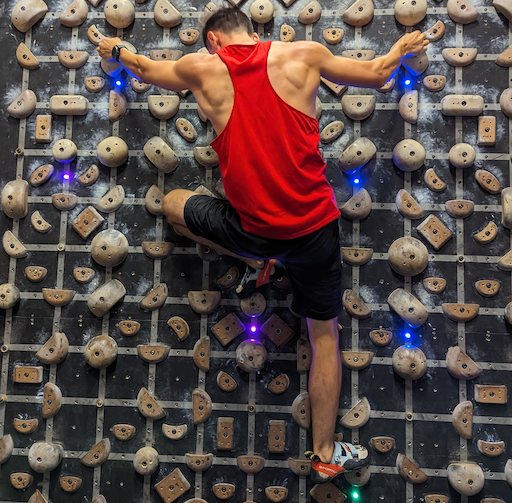
I consider myself a bit of a recreational athlete, meaning I do sports for fun and health: rock climbing, Muay Thai, running, and occasionally visiting conventional gyms. In 2021 I worked out 365 days straight and as of now have 2.3K logged activities on Strava with a 140 weeks long streak. I haven’t been like this 9 years ago or earlier, barely doing any activities back then, but over time I realized that health and time are the most valuable assets I have. This post is a few things: self reminder to stay on track, potentially some inspiration for you, and an attempt to drive analogies between athletic performance training and software engineering careers.
LEVEL 0: Non-Compromisable Fundamentals
There are only three fundamentals in my opinion. Compromising these is the worst thing you can do to your health, not just physical, but also mental performance, yes including your software engineering career.
Sleep
- I cannot stress enough how important sleep is: lack of sleep is a slow form of self-euthanasia. The shorter your sleep, the shorter your life.
- Reducing your sleep time to do more work is counterproductive and all the way detrimental to your health and creativity. It may work short term only or if you have some special super-human abilities. I don’t.
- For a software engineer, sleep deprivation doesn’t just hurt your health. It destroys creativity and makes complex problem-solving nearly impossible. My productivity is extremely low if I haven’t had enough sleep two days in a row.
Nutrition
- You become what you eat.
- I don’t want to expand too much here. We all know the basics: not skipping meals, proper balance of macro and micro, no junk food, less sugar, little or no alcohol. It’s all common knowledge. Consistency is hard.
Physical activity
- The basic amount of physical movement is a MUST unless you want to die earlier.
- To cite AHA: “at least 150 minutes per week of moderate-intensity aerobic activity or 75 minutes per week of vigorous aerobic activity, or a combination of both, preferably spread throughout the week”.
- For those of us sitting all day, this is non-negotiable. Even a 10-minute walk can be that ‘garbage collection’ our brain needs to consolidate thoughts.
LEVEL 1: Improving and Growing
Improving Sleep
I am going over sleep again but this time with more practical recommendations if you are targeting greater benefits.
- Adjust your sleep duration to your needs. For example, my baseline sleep need is 7h50min, but after very intense kickboxing class >600kcal my need increases by about 50 minutes or if I had an easy day it may reduce a bit. I get this info from my Garmin’s “sleep coach”, the way I address this is by going to sleep earlier or later, not by changing my morning alarm.
- Improve quality of sleep. Tracking sleep phases helps, and general recommendations also help (darkness, cooler temperature, regular timing), but what I found helped me a lot was to reduce my coffee consumption to single coffee very early in the morning. What might help you might be different.
- Here is my old post reviewing the “Why We Sleep” book. Practical tips for posterity:
- Stick to a sleep schedule
- Don’t exercise too late in the day
- Avoid caffeine & nicotine
- Avoid alcoholic drinks before bed
- Avoid large meals and beverages late at night
- Avoid medicines that delay or disrupt your sleep (where possible)
- Don’t nap after 3pm
- Make sure to leave time to relax before bed
- Take a hot bath before bed
- Have a dark, cool (in temperature), gadget free bedroom
- Get the right sunlight exposure
- Don’t stay in bed if you (really) can’t sleep
Getting more out of your nutrition
Besides all of the regular recommendations I would like to mention few additional ones:
- Gut Health: a diverse gut microbiome supports overall health. Strive for a variety of foods.
- Blood Sugar and Mood: High blood sugar correlates with mood fluctuations, so stable blood sugar levels are ideal. Watch sugar consumption.
- Creatine is a safe, extensively studied supplement shown to benefit both power and endurance performance. Ok and beneficial to consume creatine. I do. And yes, after a few months of consistent consumption I noticed a small increase in my strength when climbing.
- Protein. If you are building muscle, it is ok to add some extra protein if you are not getting enough with regular food. I do, though I’m not building muscle actively.
- A sugar crash is the enemy of deep work. I sometimes take an energy drink – but that’s a horrible idea as it’s like taking on high-interest tech debt. A cheap ‘boost’ now that you’ll pay for all afternoon.
Physical activity
- My personal weekly target is minimum 300 active minutes (or 150 vigorous), though this is challenging with intense software engineering jobs. I hit my 300 active minutes with 2 Muay Thai classes, 1-2 climbing, 1-2 runs, 1-2 weights exercise or some other activity.
- Studies show that maximum health benefit is reached up to 600 active minutes after which you are really optimizing for performance and not health. I just changed my target to 400.
Recovery
- Once you are doing a lot of activities recovery becomes a “thing”. Not only this is needed for physical activities but also mental. We need to take vacations from time to time. We need to take rest at weekends to avoid burnout.
- Recovery should be periodized to support long-term training. Rest well and enough before next training which should be harder (longer & intense) than previous one(s).
- For us, software engineers, it is also crucial to have mental recoveries. Also just as muscles grow during rest, our best ideas often surface when our brain is in ‘recovery’ mode.
- I personally prefer to work extra hard during the week but then keep my weekend completely to myself and avoid logging-in to work on weekends (unless I’m oncall).
LEVEL 2: Optimization
Optimization comes last. Once you have all of the key ingredients and are consistent only then you can start thinking about all of the niche nitty-gritty optimizations, not before.
Choices
- We can only optimize on one of the three — health, body composition, or performance. A balanced approach might be best for recreational athletes, but you cannot reach maximum in all three. At the moment I seem to be doing a bit of all of them, with the intention to optimize for health rather than the other two. It is tempting to build muscle or push for that next climbing grade or a new personal record on a 10k run.
- I think in our careers we might be also facing some choices – do we optimize our hard technical skills or do we develop soft skills, do we build breadth of knowledge or go very deep. It’s a choice and we can only optimize one of them and others could still improve but you won’t reach peak in them.
Deliberate Training
- When you go running, you can just run regular 5k at whatever pace you find manageable, or you can do a variety of specific training – you can do interval training, long easy runs, tempo runs, etc. Combination of these different dedicated runs help with your race time.
- When you go climbing, you can just climb whatever for fun, or you can dedicate a session to endurance, do bouldering 4×4, do handboarding, do dedicated climbing specific stretching, etc. This pushes your max grade.
- Same with all other sports…
- This can be extrapolated to software engineering as well. You can just be doing your work from day to day or you can be deliberately spending some time to advance. This can come in the form of taking courses, reading books, working with your mentor, trying new technologies out, etc.
Mental resilience
- Elite athletes frequently employ self-talk such as “You will move up” and “You are #1” to boost performance. Experiment with positive self-talk. Maybe read book “Unf*ck youself”. I know this sounds odd and so on – but if top elite athletes are doing this there must be merit to it.
- At work we should try to fight imposter syndrome. Too often than not we think that we don’t know enough and are not good enough, while the correct way is to think otherwise and if you are in a leadership position you should assure people you lead with their skills.
Metrics
- I love measuring and tracking my health and sports progress. I’ve been doing so since 2016. Buying a Garmin sports watch was one of my best purchases of my entire life. My latest one is Garmin’s Fenix 7X Pro Sapphire. The reason this is one of the best purchases is because it is motivating to know how you are progressing (at least for me) and unlike regular apple/google watches this one is sport oriented and battery lasts 28 days (yup ‘days’).
- I’m creating this health/sports snapshot for myself and will be able to compare it a year from now. Around birthday seems to be a good cadence:
- Age: 37
- Weight: 150lbs (68kg)
- Sleep: avg 7h17m vs. avg sleep need: 8h02m
- Vo2Max: 56 mL/kg/min
- Heart: HRV: 47ms, rest: 53bpm, max: 166bpm(avg/year)
- Run PRs: 5k 22m53s, 10k 48m17s, Half: 1h58m
- Weekly minutes: 348m (avg weekly over year 10/2024-10/2025).
- Calisthenics: Max pullups: 21 Max pushups: 102, max pushups in session: 600
- Max climbing grade: V7 (boulder) and 5.11+ (rope)
- Max barbell: deadlift: 255lbs, bench: 150lbs, squat: 140lbs (yeah, I know, bench more than squat 😂)
- Swim: barely making it across the pool, but something I want to improve
- Bike: 10mi – 35:30, 30k – 1:09, though I never tried to push for anything here
- This is a direct parallel to our work in engineering. We are judged by metrics as well, like how many pull requests we do, the impact of projects, operational metrics, code quality metrics. I do personally pay attention to these as well and rigorously track them. I will share my weekly work methodology one day on this blog.
Risks
Pushing for anything in performance can have negative effects as well. Here are some personal notes (not universally applicable):
- Chronic Traumatic Encephalopathy (CTE). A risk associated with repetitive micro-concussions, particularly in contact sports like MMA. Since I’m sparring with people who actively take part in competitions occasionally I get hit fairly hard (even though we try to be careful).
- Injuries. I’ve had periods where I climbed 3-4 days a week resulting in shoulder injury which needed at least 3 weeks to recover. The key here is to listen to your body and to alternate activities and load.
- Supplementing. Taking any supplements other than creatine, protein and, maybe, some generic vitamins is very questionable. I recommend against it, but you do you.
- Burnout. Applying a “max-effort” training mindset to work 52 weeks a year can lead directly to burnout.
- Metric Fixation. Over-focusing on a new running PR can lead to a physical injury, obsessing over proxy metrics (number of code changes or lines of code) can lead to a career injury which is optimizing for the wrong thing, and missing the actual business impact.
Consistency
Probably the most challenging part of the any of the above levels is consistency. It’s just hard. It’s hard to go on a run when you just don’t enjoy it or when the weather sucks, it is hard to go climbing when the mood isn’t striking, it is hard to find time when you have an intense work schedule. So how do you solve these? I found a few ways that helped me, maybe something would work for you.
- Cut off low value activities from your life. I do not watch any TV whatsoever. My social media usage is very low. I don’t play video games. I try to recognize time wasters, but may have blind spots. AI seems to be good at helping me unblind things.
- Curve out time were you have opportunity. My company provides breakfast, lunch, dinner in the office so I leverage these for time saving. I specifically looked for place close to work so I don’t spend time commuting. Cut off nonsense and optimize time – time is the only thing you will never ever get more of.
- Work on establishing habits. Books like ‘Atomic Habits’ and ‘the power of habit’ give great recommendations, but basically you need to build a clue to kick-off something automatically over time.
- Find joy in your activities. I didn’t really like running at the beginning – it felt boring, but now I enjoy it and it definitely helps with anxious or depressing thoughts. I’m just going for a run when I need to clear your head. Climbing often is a social activity – solving problems with other guys and gals in a gym is fun.
- Pair up. If you’ve got friends sharing similar sport interests it is always great to be done socially. I definitely miss those weekly 10k with friends back in Vancouver.
- Find an accountability partner. Another thing I do in addition to everything above is having someone I am accountable to. It could be either through challenges I’ve been running or by simply promising someone. I hate breaking promises.
Conclusion
Our cognitive performance is inseparable from our physical health. The same principles that build a 10k PR or a V7 climbing grade are the exact same ones that build a high-impact, sustainable engineering career: you need fundamentals, deliberate training, and recovery.
You can’t sprint a marathon, and you can’t sprint a career without burning out. By investing in your physical platform, you are directly investing in your mental output. The return on that investment is a career and a life that is more performant, resilient, and sustainable.
Let me know what you think!
P.S. This post was in part inspired by my personal trainer from Vancouver. Thank you for your recommendations! And now I promise to incorporate compound barbell training once a week back into my routine and will report back after some time! 🫡
The Practical Ceiling: AI, Diminishing Returns, and Our Future
October 19, 2025 AI, Opinion No comments
I would like to discuss a dilemma between near science fiction predictions of development of AI and grounded practical applications of AI.
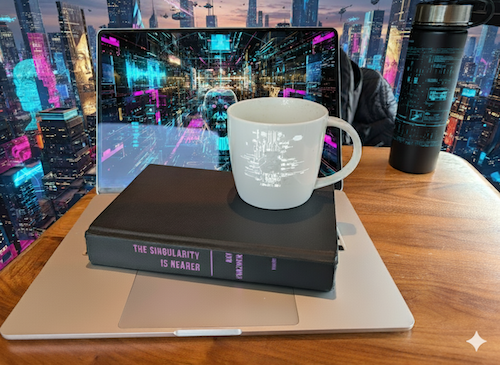
Gemini or any other LLM does NOT take credit for the contents of the blog post, though!
First of all, it is completely undeniable that AI is changing our lives and will have a transformative effect on the future. We can argue that humanity has lived through many transformative events over and over again: invention of fire, agriculture, writing, electricity, industrialization, information technologies, so AI can be seen as just one more invention on our part. Now, is AI really just one more invention or something that would absolutely change what it is to be a human as we know it? Is this our last invention?
I just finished reading the book “The Singularity is Nearer”. The book is arguing that we will eventually extend the capabilities of our biological brains and go beyond the limits of our organic bodies. At first we would come up with inventions that would greatly extend and improve our lives (reaching “longevity escape velocity” in mid 30s) and that we will build brain-computer interfaces (think of phones now, AR glasses or something of the like next, brain implants next, nanorobots next, with eventual consciousness upload to the information network). As another book “Homo Deus” (my review) argues – we eventually become god-like and gain the ability to control life and environment and Homo Sapiens go extinct. We might eventually lose our carbon-based existence and just become information.
To my way of thinking, while much of that, like nanorobots repairing our bodies, may sound like science fiction, as long as it doesn’t break the laws of physics I’m on board that it can and may happen.
Now, let’s look at some more practical examples.
- From transportation technology: Crossing the Atlantic would be 6 weeks sailing in the 1800s, 6 days in early 1900s with fast liners, 1950s – 8 hours by plane, 1970s – concorde doing that in <4h, and technically 90min possible from anywhere on planet to anywhere by rockets, but we are still flying boring 8h from London to NY.
- Military: We came up with ever larger nuclear bombs, but post “Tsar Bomba” in 1961 it simply doesn’t make sense to make any larger ones.
- Digital: digital camera resolution, audio quality, single processor’s clock speed, and many more examples where more has diminishing returns and becomes impractical.
This same pattern of hitting a practical limit is not just a historical curiosity because I can see it already happening in the world of AI. Let’s have a look at some examples:
- LLMs are now reaching the plateau of information saturation where they basically learned everything there is to learn from the internet.
- Vibe coding is mostly hype in my opinion. Yes, I do vibe-coding as well for fun, like my previous post about doing 3h multiplayer typing game, and it is a huge productivity booster, but I believe it fundamentally is like many other tools [post pending] – having logarithmic benefits – huge at the beginning and eventually ever more diminishing.
- Plateau in image recognition. This once was a grand challenge of computer science, and is now a largely solved problem for most practical purposes, but pushing models to 99.9% accuracy is not practical.
- Parameter count race. All those 7B to 70B to 1T parameter models. There is no point in multi-T models and the cost is just not worth it. I recently ran 7B LLM model on my mac air and it is not that bad at all.
My point is that in many individual fields where AI is applicable we will be reaching the some kind of optimal point between theoretical possibility and practical application. In the process we will be seeing major transformations, like the entire sector of jobs associated with driving will be replaced by self-driving vehicles. There is a good chance this could create socio-economic disruptions and ripple effects. Just imagine, some rich “haves” can give their child superpowers while some poor “have nots” could not afford that. But I agree to the point that this is only “in-transite”, because now people in some poor countries can afford a phone that would be multi-billion worth of technology if this was mid last century.
My own predictions are that:
- AGI is still very far away, a much longer time-frame than “The singularity is nearer” is arguing for. Maybe 10-30 years from now.
- Each and every AI application will reach its optimal practical point.
- Human lives will improve as they did with other technologies.
- Software engineering jobs won’t get extinct, but they will transform and we need to adopt.
- I will die, but someone born next century might not.
Vibe Coding & Designing Typing Multiplayer Game
October 11, 2025 AI, Fun 2 comments
The other day my daughter showed me the typing game her teacher encouraged kids to play. My daughter was impressed with my typing speed. This blog post is to impress her even more.
The game she played was online typing practice – you type text and compete with other players for speed and accuracy. Players are represented as racing cars. If you win races you qualify to higher league of players. In this post I want to do few things:
- Vibe code standalone JS file – you can try it out right in this blog post.
- Vibe design a full fledged online game.
- Vibe implement the backend for the multiplayer game.
Vibe Coding Typing Trainer
Here is the result of about 30 minutes of work. You can play it yourself (if reading from e-mail you may need to open the blog).
This was achieved with 13 prompts, summarized like this:
1. Initial project creation prompt
2. CORS issue fix request
3. Container class addition request
4. HTML demo update request
5. Simple version (typing.html) request
6. Visual version creation request
7. Error display duration adjustment
8. Error display fix attempt
9. Revert request for error display
10. UI enhancement with "click to activate" label
11. Visual version adjustment request
12. Final revert request
13. History documentation request
Vibe Designing Multiplayer Game
Now instead of working with Claude, I started working with Gemini to create a design for the multiplayer game.
Here is the high level system design document: opens in another page.

Given that I explicitly prompted it to be fully stateless, relying only on client side local history, no login and no other complications this seems to be a fairly good start. My prompt was:
Now I want you to create a comprehensive system design to build the game described above. We need:
- simple website with JS logic
- backend that can create rooms of gamers based on their levels
- the game should protect user privacy so there is no user info stored on backend
- game history is only stored as long as user has local cookies
- backend should handle at least 10k users
- single game has max 6 players
- if user wins the game they are placed into higher league
As a next step I fed the generated system design document back to Claude in Visual Code. This time I had to fight a lot more with the AI as it was running into issues connecting players but finally arrived at the multiplayer game:

Prompting history:
- Initial setup of multiplayer backend server
- Setup Node.js with Socket.IO and databases
- Create basic server structure
- Implementation of matchmaking system
- Create skill-based queue system
- Handle player matching logic
- Game room and state management
- Implement room creation and management
- Handle player synchronization
- Create typing texts table
- Add sample data
- Visual keyboard integration
- Add keyboard visualization to multiplayer version
- Implement key highlighting
The backend is powered by:

- Node.js
- Socket.IO (for real-time WebSocket communication)
- Redis (for server-side data/caching)
- PostgreSQL (for the database)
Conclusion
I have complete confidence that if I had 2 or 3 days to spend on this I could actually create a game that can be put out there on some servers and be actually playable by actual human beings! The new world of AI is nuts. I’m out of my time allocated to blogging, but I’m convinced over and over again, that the old times of programming are over – the only way to survive is to adopt.
P.S. Another thought: I have a friend who works on Linux kernel stuff. You would imagine that hardcore stuff like that would not be affected by the era of AI, but no, he says that AI helps to properly review pull requests to the kernel and catch real issues, moreover it does help to build more complex things. Caveat, of course, is that the proper knowledge is still required. Who knows, if I knew nothing about programming, maybe, I wouldn’t be able to build this typing game so quickly? Or, maybe, this is just a matter of time?
Finding Your Voice at Work
October 5, 2025 Opinion, RandomThoughts No comments
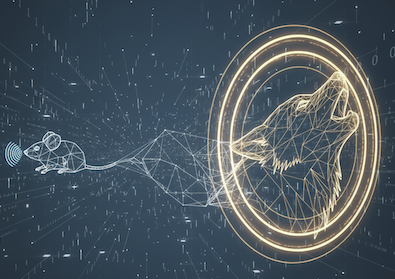
“If you stay silent as a mouse you will just stay where you are.“
This was the advice I got from a team lead at my first job, right after I’d rushed through the office to complain about a broken system that endangered a delivery to our client the next week. He praised me and didn’t want to shut me down, even if I might have overdone it. For many of us, finding that voice is the hardest part. We hold back our ideas, questions, and concerns for a number of reasons. Let’s break down the four most common ones:
- We assume that something is obvious.
- We assume that others know better.
- Deference to authority.
- Physiological: not feeling safe, fear of judgement.
Stating the Obvious
One of the biggest mistakes we make is assuming that others have the same knowledge or perspective as we do. What seems obvious to you is often the result of your unique experiences, learning, and context. But others may not have the same background.
One of my university professors used to say there are only three types of proof: by contradiction, by reasoning, and obvious. I struggled with the 3rd one because when something is somehow “obvious”, it wasn’t that obvious to me at all.
Quickly re-stating that “obvious” part often removes the ambiguity from the discussion and sets the common baseline. Without being aligned on the same baseline the entire conversation doesn’t make sense, that’s why it is super-important to simply re-state the “obvious” and explicitly list what the assumptions are.
Sometimes I notice how very senior leaders would ask very basic questions about something only to witness that not everybody in the room was on the same page about this basic truth.
Sharing the “obvious” has very little drawback. While there may be a small cost, say a bit more document space or an extra minute in a meeting, that cost is a cheap insurance policy against catastrophic misalignment. A little information overhead is always better than massive miscommunication.
Others know Better
It is oftentimes true that others know better (to state the obvious). But this shouldn’t be a blocker, rather it should be an incentive! If you speak up and you’re wrong, you become the main beneficiary: you get corrected and learn a critical piece of information. If you’re silent, you leave the meeting still misinformed. If a question is forming in your mind, it’s highly likely that several other people in the room are thinking the exact same thing but are too afraid to ask. By asking, you don’t expose your ignorance; you serve the collective need for clarity.
Deference to Authority
Sometimes it’s not fear or lack of clarity, but simple deference to authority. When senior leaders are present, people instinctively stay quiet, assuming their ideas matter less or that others will take the lead. This one is tricky as it also includes some cultural aspects of how you were raised and also cultural aspects of your company.
More often than not, however, leaders actually want more people to speak. They value a challenging question or divergent perspective far more than a room full of nodding heads. In fact, leaders sometimes speak first precisely to kick-start the conversation, and they often intentionally hold back because they don’t want their presence to silence the room. In fact, sometimes leaders don’t speak at all precisely because they want to ensure others feel there is room to contribute. Silence out of deference is perceived as alignment, which can lead to misguided decisions. Don’t assume your idea matters less. Assume your perspective is a critical puzzle piece the decision-maker needs.
Physiological Safety
This one is a tough one because it’s rooted in our fundamental human desire for psychological safety. This is a need that is not always easy to satisfy in high-pressure environments, such as the big tech corporate world.
Google has done this famous study “Project Aristotle” which concluded that psychological safety was the number one predictor of a team’s effectiveness, more so than the individual skills, intelligence, or seniority of the team members. The “how” a team worked together was more important than the “who.” Safety there means that team members are confident that no one will embarrass or punish them for admitting a mistake, asking a question, or offering a new idea.
Being comfortable taking “interpersonal risks,” such as challenging the status quo, offering divergent ideas, or asking for help is a lot more beneficial than taking another risk of closing in and solving the problem on your own.
Conclusion
The path from “mouse” to “wolf” isn’t about aggression or volume. It’s about recognizing that your unique perspective is a crucial piece of the collective intelligence. Your job isn’t to be an expert on everything, but to ensure that the room has all the information it needs: whether that’s stating the obvious, asking the ‘dumb’ question, or challenging the senior leader. So:
Ask the ‘n00b’ question. Challenge the status quo. State the obvious. Share your ideas. You lose virtually nothing, but the collective clarity and your growth is a big win. Speak up!